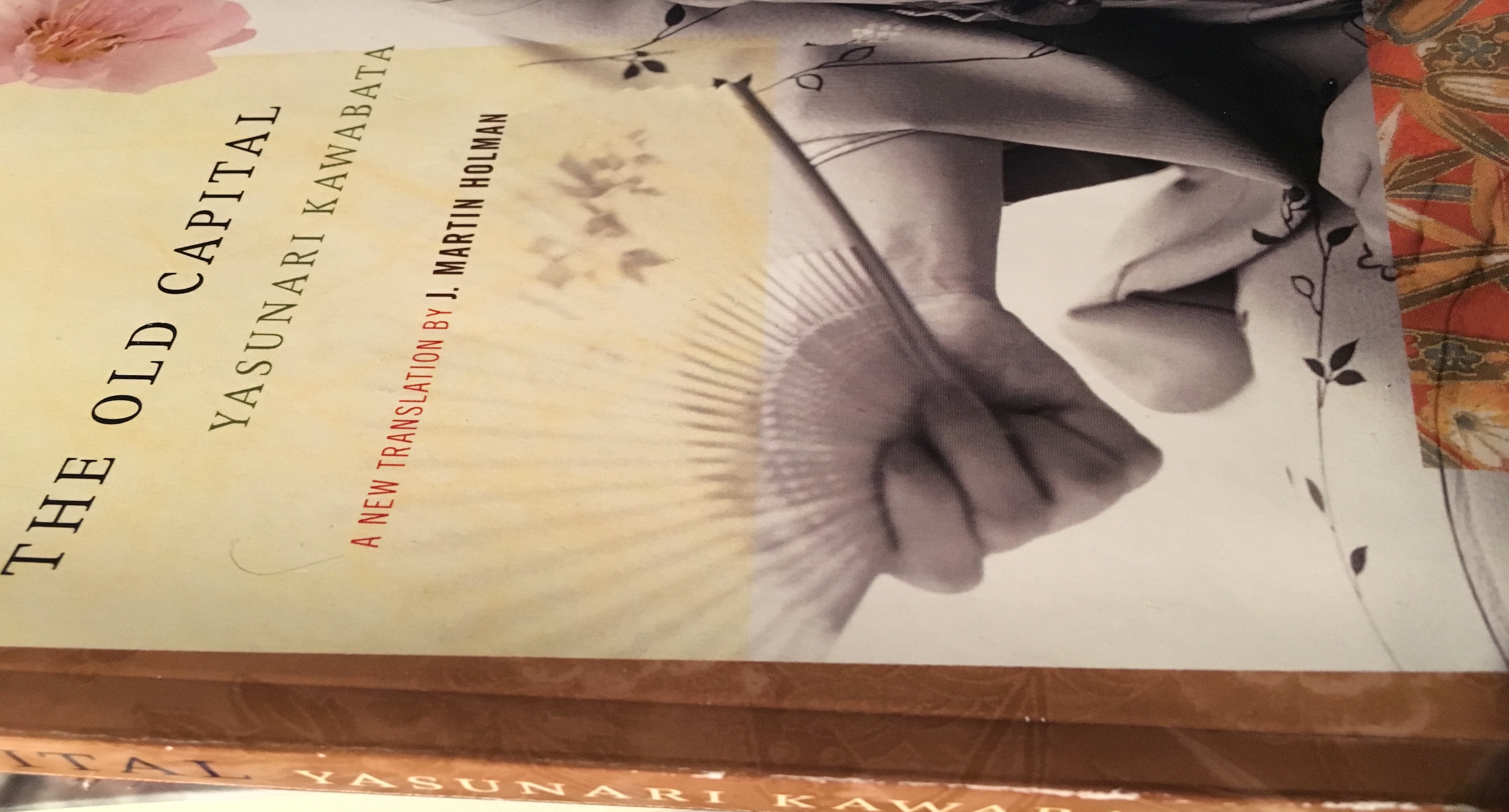
Book: The Old Capital
Author: Yasunari Kawabata
This book is one of my favourites written by Yasunari Kawabata. His style is undeniable: simple, soft and full of meaning. As with many of his books he relies a lot on the reader’s senses. Throughout the book we visualize the seasons in the old capital Kyoto, the transformation of the nature or the festivals in the city. We can vividly see the maple trees, the flowers, smell the spring, hear the wind and the rain.
… several small white butterflies fluttered through the garden from the trunk near the flowers. The whiteness of their dance shone against the maple, which was just beginning to open its own small red leaf buds.
Kawabata likes to focus on single threads. His books have a small number of characters. But this doesn’t make them simple or uninteresting. On the contrary he manages to take advantage of this simplicity and follow in depth a chosen theme. The ‘Old Capit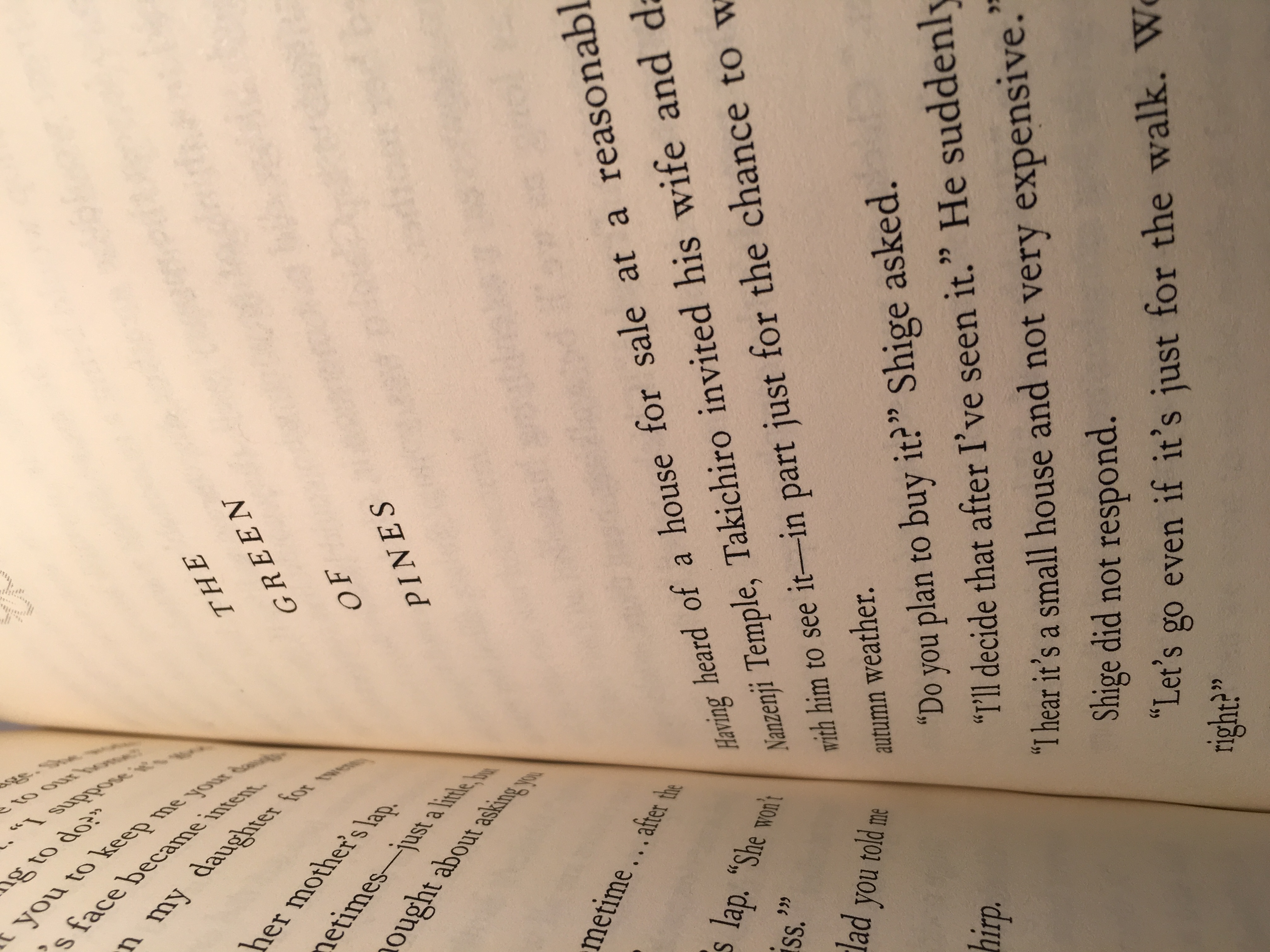 al’ takes an existential dilemma and pursues the development of his characters in this context. But the main topic is change, moving from the golden age of the capital to a modern era. This change is reflected on several planes, on one side in the city itself but also in the characters’ life.
He follows the life of Chieko a young girl who was abandoned as a baby. Her adopting family loves her like their own daughter and their relationship is amazing. When she entrusts her secret to her friend Shin’chi his first reaction is to not believe her:
Even you sometimes feel as though you were an abandoned child, Chieko? If you are abandoned, then so am I … spiritually. Maybe all people are abandoned children. Perhaps being born is like being abandoned on this earth by God.
…
They do say we are God’s children. He abandons us here, then tries to save us …
Her father Takichiro is also having a life crisis. Being a kimono designer he faces a lack of inspiration and tries to modernise his style by getting inspiration from Paul Klee’s paintings. He’s insecure and fears that he won’t be able to make any strong designs. But Chieko appreciates and wears only her father’s creations:
Father’s designs come from the depth of a spiritual wave.
Takichiro struggles with the changes in the world, in his life, with the modern wave in the arts.
I hate it that Western words have come into such use. Haven’t there been splendid elegant colors in Japan since ancient times?
Chieko meets by chance a girl who resembles her and later finds out that they are twin sisters. This discovery puzzles her and she goes from denial to acceptance and then happiness in finding her sister. The whole story is touching and the new character Naeko is surprising.
The two girls had completely different lives: one living in the city surrounded by love from her adoptive family, and the other living and working in a mountain village and orphaned at a young age. Chieko is a refined young girl who grew in a relatively happy and wealthy family. She’s actually been in a way isolated and too protected from the outside world. On the opposite Naeko had to work and fight for her life at a young age.
Naeko feels guilty that she was the one that her parents kept and not Chieko. She only thinks about Chieko’s happiness and in a way venerates her.
I don’t want to be even the slightest obstacle to your happiness. I’d rather disappear completely.
And she wants to be closed to her because she’s her only family left. But probably also because she’s her twin sister and feels a special connection to her. To her being close to Chieko is the equivalent of hapiness:
Happiness. This is happiness.
I like their power, the courage to confront the situation even if in a silent way. Chieko proposes to Naeko to stay with her at her parents but Naeko can’t accept it. At least at this moment in time … and as always the book is open to interpretations with respect to what may later come. It’s my hope that the two sisters stayed together and made up for the time lost. Having a sister is one of the best things in life.